AI for Financial Advisers: Where It Saves Time and What the FCA Expects
How small UK advice firms are using AI for meeting notes, suitability report drafts and admin, what the FCA said in October 2026, and how to set it up so the adviser stays accountable
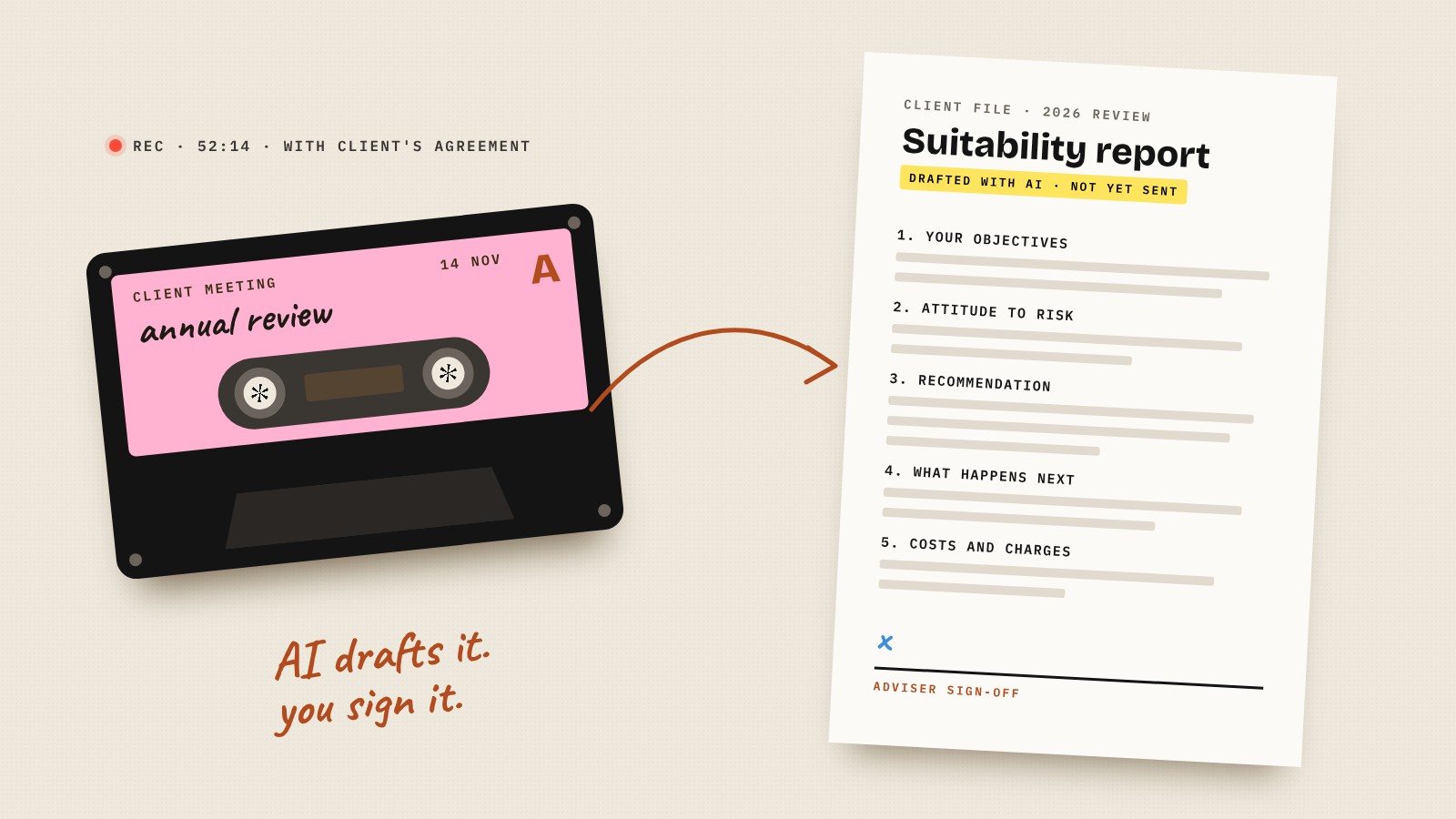
Ask an adviser what eats their week and it's rarely the advice. It's the notes after the meeting, the suitability report, chasing a client for a pension statement for the third time and keying it all into the back office.
That's exactly where AI is landing in advice firms, and it's landing fast.
Small firms are falling behind
AI use in UK advice firms jumped from 43% to 74% in a year, according to intelliflo's 2026 survey. Meeting notes are the most common use, followed by report writing.
But it's not even. Fidelity found advisers at firms with six or more client-facing advisers are more than twice as likely to be using AI for meeting notes as those at firms with five or fewer.
Bigger firms have someone whose job it is to pick the tools and wire them in. Smaller firms have an adviser who's already busy. That's the gap we help close.
Where AI genuinely helps an advice firm
- Meeting notes. The meeting is recorded with the client's agreement, then turned into structured notes with the soft facts, goals and actions pulled out.
- Suitability report drafts. Notes, fact-find and your house template turned into a first draft. The adviser or paraplanner checks and finishes it.
- Annual review prep. Before each review, a summary of what's changed, what was agreed last time and what's outstanding.
- Client chasers. Reminders for missing documents, signatures and statements, sent on time without anyone tracking them in a spreadsheet.
- Back office updates. Notes and actions logged against the client record, rather than retyped.
- Plain-English letters. Technical points rewritten so clients actually understand them.
Most of that is automation with AI in the steps that need reading or writing. The advice itself stays with the adviser.
What the FCA now expects
In October 2026 the FCA published AI in financial services: good practice and areas for improvement. It's not a new rulebook. The FCA was clear that its existing framework, including the Principles, the Consumer Duty and the Senior Managers and Certification Regime, still applies when firms use AI.
A few practical points for an advice firm:
- Someone owns it. Accountability for how the firm uses AI should sit with a named senior manager.
- Firms stay accountable for third-party tools. Buying an AI tool doesn't hand the responsibility to the supplier.
- Test what clients receive. The FCA found some firms assumed their AI outputs were clear without testing whether different consumer groups understood them.
We're not compliance consultants, so run your setup past whoever looks after your compliance. What we do is make sure the tools are set up so a person checks everything before it reaches a client.
What stays human
- The recommendation. AI drafts the report. The adviser makes the recommendation and signs it off.
- The relationship. Clients pay for someone who knows them. That conversation is yours.
- Anything a client reads. It lands in drafts and a person sends it.
- Vulnerable clients. Spotting that someone's struggling needs a person paying attention, not a summary.
Specialist tools or general AI?
There are now dedicated AI tools built for advisers, and for meeting notes they're often the right choice. Where small firms get stuck is everything around them: the tool doesn't talk to the back office, the template isn't quite right, and the chasing still happens by hand.
That's where we come in:
- Map the admin. Where your advisers' and paraplanners' time actually goes, and what's worth fixing first.
- Pick the right tools. Independent advice on what to use, including whether the specialist tool you're being sold is worth it.
- Wire them together. Automations in Make linking your meeting notes, back office, inbox and calendar, owned by you.
- Set up Claude properly. A business account that doesn't train on your data by default, with Projects for your report templates and house style.
- A sign-off step built in. Nothing reaches a client without an adviser checking it.
Most firms start with a 45-minute session (£150). Builds start from £800, and a Claude Business Setup for the team is £795.
Questions people also ask
How are financial advisers using AI?
Mostly for the paperwork around advice: meeting notes, first drafts of suitability reports, report personalisation, annual review prep, client chasers and back office updates. The adviser still makes the recommendation and signs off anything a client sees.
Does the FCA allow financial advisers to use AI?
Yes. The FCA isn't creating AI-specific rules. It expects firms to use AI within the existing framework, including the Consumer Duty and the Senior Managers and Certification Regime, with clear accountability and checks on what clients receive.
Can AI write suitability reports?
AI can write a good first draft from your meeting notes, fact-find and template. An adviser or paraplanner should check and finish every report, because the firm is responsible for what's in it.
Is it safe to put client data into AI tools?
Not into personal or free accounts. Use business plans or specialist tools that don't train on your data, check where data is stored and follow your firm's data security policy.
Should small advice firms use specialist AI tools or general ones like Claude?
Often both. Specialist tools are strong for meeting notes and adviser workflows. General tools like Claude are good for drafting, plain-English rewrites and internal work. The time savings come from connecting them to your back office so nothing is keyed in twice.
How much does it cost?
At Make Automations, a 45-minute session to work out where to start is £150, automation builds start from £800 and a Claude Business Setup for the team is £795.