AI for HR: What Small UK Businesses Can Hand Over (and What Stays Human)
The HR admin AI and automation genuinely take off your plate, a staff chatbot that answers from your own handbook, and the people conversations that should never go near a bot
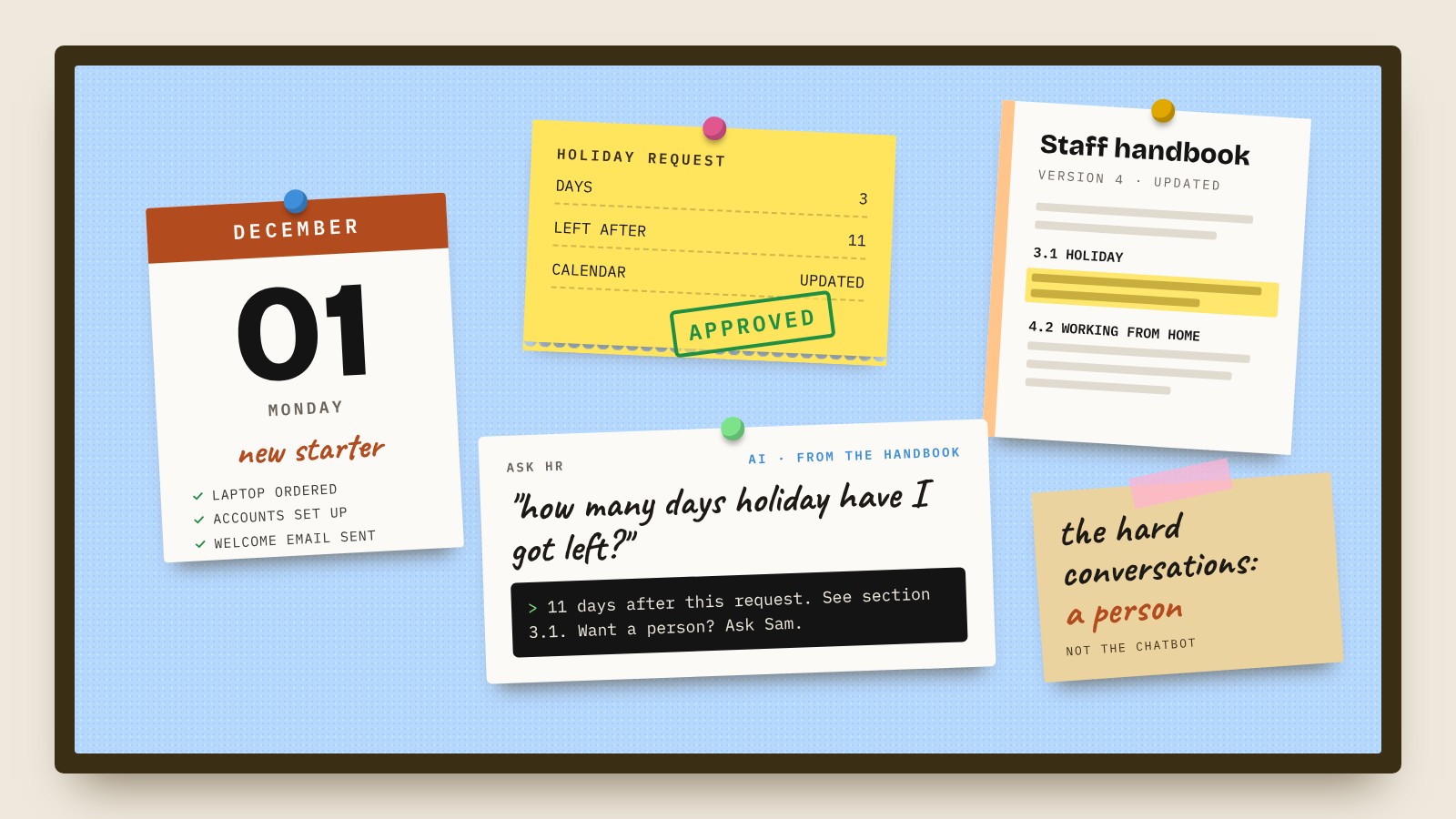
In most small businesses, HR isn't a department. It's the owner, an office manager or one HR lead doing everything from contracts to "how many days holiday have I got left?"
That's exactly where AI and automation earn their keep. Not by replacing the person who knows your team, but by taking the repetitive stuff away so they've got time for the bits that need them.
Your team is probably using AI already, whether you've said so or not. The CIPD found 61% of UK organisations now let staff use generative AI for work, so it's worth getting it set up properly.
Where AI genuinely helps HR
- Onboarding. A new starter is added once and everything else follows: welcome email, accounts requested, equipment ordered, day-one schedule sent, check-ins booked for week one and month one.
- Holiday and absence. Requests come in, get logged, the manager gets a nudge to approve, and the calendar updates. No spreadsheets passed around.
- Policies and handbooks. First drafts of policies, job descriptions and letters, written to your template. A person checks them, and you take proper advice on anything legal.
- Staff questions. A chatbot that answers from your own handbook and policies. More on that below.
- Reminders. Probation reviews, contract end dates, training renewals and right-to-work rechecks flagged before they're missed, not after.
- Meeting notes. A one-to-one or review turned into tidy notes and actions for the manager to check.
Most of that is automation with AI in the steps that need reading or writing. Same thing in, same thing out, every time.
A staff chatbot that answers from your handbook
This is the quickest win for most businesses, and the easiest to show your team.
I'm one of the technical admins in a big online community, and we built a chatbot that searches all our content and points people to the right answer. Questions to the admins dropped right off. It freed up about 10 hours of support a week, and even the admins started asking it.
An HR chatbot works the same way. Load in your handbook, policies and FAQs, and staff can ask "what's the policy on working from home?" or "how do I book a day off?" and get the answer from your own documents, with a link to the right page.
To do it properly:
- Answer only from your documents. If it can't find the answer, it says so and points them to a person.
- Say it's AI. Straight away, with a way to reach someone.
- Keep it to policy, not people. It can explain the sickness policy. It shouldn't be anyone's first point of contact when they're struggling.
- Keep the documents current. Out-of-date policies give out-of-date answers.
What stays human
There are a few things I don't think AI should ever do in a business, and a lot of HR is on that list:
- Disciplinaries and grievances. AI can help you organise the notes. The decision and the conversation are yours.
- Hiring and firing decisions. Let AI sift and summarise, then a person decides.
- Anything sensitive. Health, family, money worries, someone having a hard time. People want a person.
- Performance conversations. AI can help you prepare. It doesn't deliver the feedback.
If it affects someone's job or how they feel about coming to work, a person handles it.
Staff data needs care
HR data is some of the most sensitive data you hold, and sickness records count as health data under UK GDPR.
- Business accounts only. No staff information in personal or free AI accounts.
- Training off. Use plans that don't train on your data by default, like Claude Team.
- Only what's needed. Give tools access to the data the job needs, not the whole HR system.
- Be careful with monitoring. If AI tools watch how people work, the ICO expects you to tell staff about the monitoring in a way that's easy to understand, and to do a data protection impact assessment where it's likely to be high risk.
We're not lawyers or HR advisers, so check your setup with whoever advises you on employment law. The tools side is what we help with.
How we help HR teams
- Map the admin. We look at where your HR time actually goes and pick the jobs worth automating first.
- Automate onboarding and requests. Built in Make, connected to the tools you already use, and owned by you.
- Set up Claude for the HR lead. Projects with your templates, tone and policies, so drafts come out right first time. Our Claude Quickstart is £249 for one person, and a Business Setup for the team is £795.
- Build the handbook chatbot. Answering from your documents only, saying it's AI, with a route to a person.
- A human step built in. Anything that goes to a member of staff stops in drafts for someone to check.
Most businesses start with a 45-minute session (£150) to work out what's worth doing first.
Questions people also ask
How can AI be used in HR?
The most useful jobs are onboarding, holiday and absence requests, first drafts of policies, letters and job descriptions, reminders for reviews and renewals, meeting notes and a staff chatbot that answers questions from your own handbook. Keep a person on anything that affects someone's job.
What is an HR chatbot?
A chatbot your staff can ask HR questions, like how to book holiday or what the working from home policy says. A good one answers only from your own handbook and policies, says it's AI and passes people to a person when it can't help.
Is it safe to put employee data into AI tools?
Not into personal or free accounts. Use business plans that don't train on your data by default, give tools only the data they need and be careful with health information, which counts as special category data under UK GDPR.
Can AI write HR policies?
It can write a good first draft from your template and notes. A person should check every policy, and you should take proper employment law advice on anything legal.
Will AI replace HR?
Not the people part. AI is good at the admin and the first drafts. Difficult conversations, disciplinaries, grievances and looking after your team are still the job.
How much does HR automation cost?
At Make Automations, a 45-minute session to work out where to start is £150, Claude Quickstart is £249, a Claude Business Setup for the team is £795 and automation builds start from £800.