AI for Law Firms: How Small UK Firms Can Use It Safely (and Where It Actually Saves Time)
What the Law Society and SRA now expect, the jobs AI is genuinely good at in a small firm, and how to set it up without risking client confidentiality
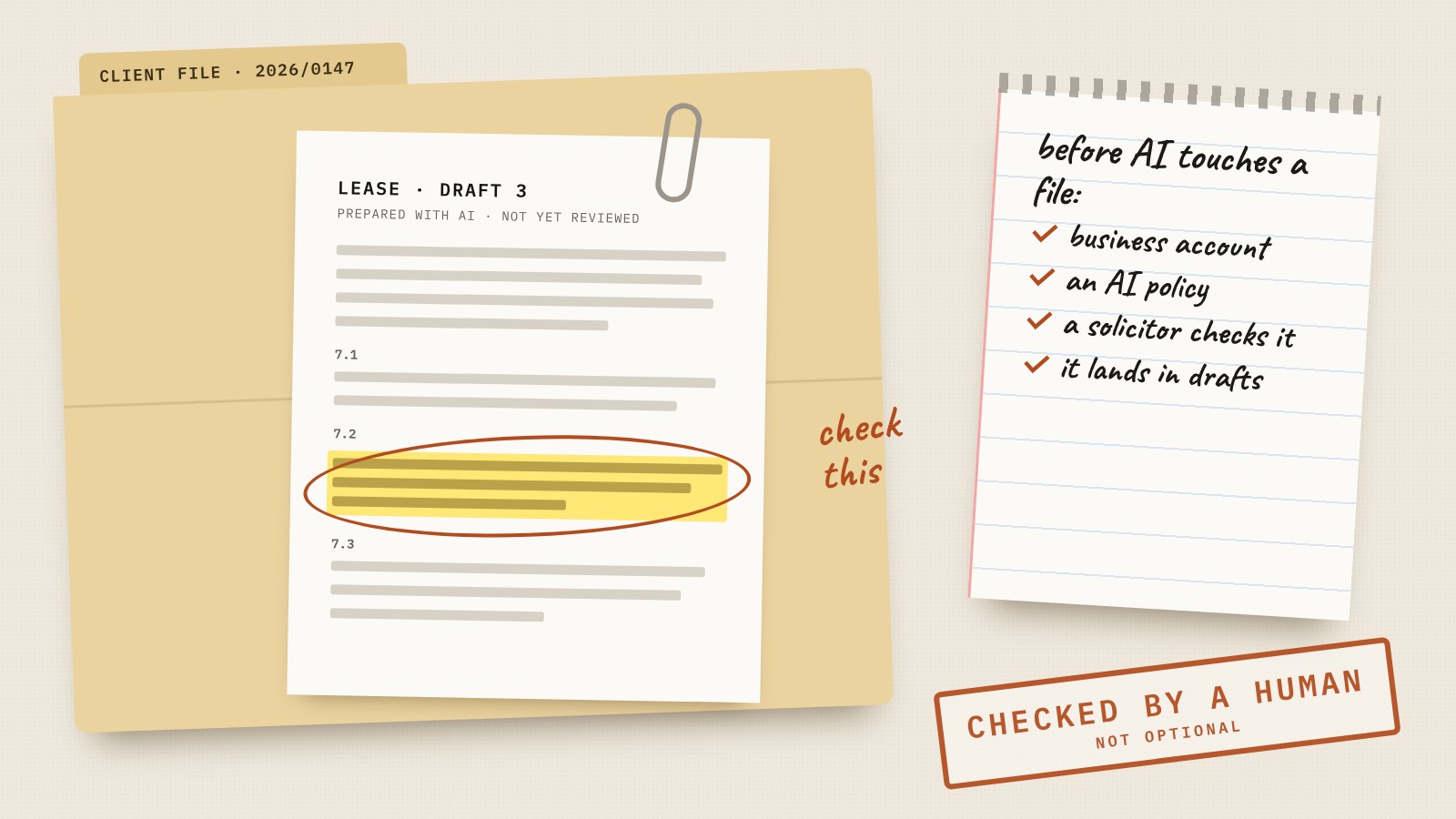
Most solicitors I speak to fall into one of two camps. Either they're not touching AI at all because they're worried about confidentiality, or someone in the office is already pasting client emails into a free ChatGPT account and hoping for the best.
Neither is great. The first leaves hours on the table every week. The second is a regulatory problem waiting to happen.
The good news is there's a sensible middle, and the profession's own bodies have now spelled out what it looks like.
What the Law Society and SRA now say
In October 2026 the Law Society published a practice note, Using artificial intelligence in legal practice (announcement here). The headline is simple: professional responsibility can't be passed to an AI tool. Anything AI produces needs reviewing by a solicitor, references need checking before anything goes out, and firms should be open with clients about how they use it.
Two months earlier, the SRA issued a warning notice on the misuse of AI. It points to the courts, where fake AI-generated case citations have already been put in front of judges, and to confidentiality, warning that putting client information into the wrong tool is likely to breach confidentiality and could permanently waive privilege.
None of that says don't use AI. It says use it like a professional: the right tools, the right settings, and a human signing off.
Where AI genuinely helps a small firm
AI is very good at the jobs that eat a fee earner's day but don't need their judgement for the first 80%:
- First drafts. Client care letters, standard correspondence, attendance notes from your rough notes, letters chasing information. It gets you 80% of the way there and you finish it.
- Summarising. Long email chains, bundles, leases and contracts turned into a one-page summary of who, what, when and what's outstanding. Then you read the bits that matter.
- A first pass on contracts. Flagging unusual clauses, missing terms and inconsistencies for you to review, not to rely on.
- Intake and enquiries. Web enquiries captured, sorted by matter type and a draft reply sitting in your drafts within minutes. You'll never miss an inbound lead, and you're often first to reply.
- Admin. Chasing clients for documents, reminders for key dates, turning a call into a file note, tidying time entries.
- Marketing. Blog posts, newsletters and LinkedIn posts in your firm's voice, from notes you've written.
What it shouldn't be doing on its own is legal research you rely on. Freely available chat tools make up case law convincingly. Use them to think, then check every authority against a proper source.
What not to do
- No client information in personal or free accounts. If staff are using their own ChatGPT or Claude logins for work, that's the first thing to fix.
- No citations you haven't checked. Every case, statute and quote verified against an authoritative source before it goes anywhere.
- No AI sending things to clients. Drafts land in drafts. A person reads and sends.
- No mystery tools. Know where your data goes at every step. If a tool can't tell you whether it trains on your data and where it's stored, don't use it.
I'm blunt about this. You've got one shot with data. A tool that gets it wrong once doesn't get a second go.
How we set AI up for a law firm
We're not lawyers and we don't give legal advice. What we do is set the tools up properly, in line with the guidance, so your team can use them without worrying.
- The right account. A business plan, like Claude Team, where your data isn't used to train the models by default, with central admin so access is controlled and removed when someone leaves.
- A firm AI policy. One page your team can actually follow: which tools, what can and can't go in, who checks what.
- Projects for your work. Your precedents, house style and standard letters set up once, so everyone gets consistent output rather than starting from a blank chat.
- A review step built in. Every workflow ends with a person checking before anything leaves the firm.
- Training. A session with your team on using it properly, including how to spot when it's confidently wrong.
- Automations for the admin. Intake, chasing and reminders, built in your own accounts so you're not tied to us.
For most small firms that starts with our Claude Business Setup (£795, half a day) or a 45-minute session (£150) to work out where AI fits your practice first.
Is it worth it for a small firm?
If your fee earners spend part of every day writing first drafts, summarising documents or chasing clients, almost certainly. Using AI for just those basics already puts you ahead of most firms.
Start small. Pick one job, like attendance notes or client chasers, set it up properly, prove it works, then do the next one. Don't try to rebuild the whole practice at once.
Questions people also ask
Can solicitors use AI in the UK?
Yes. The Law Society's 2026 practice note sets out how to use AI in line with professional duties. The key points are that responsibility stays with the solicitor, AI output must be reviewed, references must be checked, and firms should be transparent with clients about how they use it.
Is ChatGPT safe for law firms?
Free and personal accounts aren't suitable for client information. The SRA has warned that putting client information into public AI tools is likely to breach confidentiality and could waive legal professional privilege. Use a business account with training switched off by default, plus a firm AI policy.
What can AI do for a small law firm?
First drafts of letters and file notes, summaries of documents and email chains, a first pass on contracts, sorting and replying to new enquiries, chasing clients and reminders, and marketing content. A solicitor should check everything before it leaves the firm.
Can AI do legal research?
Not reliably on its own. General chat tools can invent cases and citations that look real, and UK courts have referred lawyers to their regulators for submitting them. Use AI to think and summarise, then verify every authority against a proper legal source.
Does Claude Team train on our data?
Claude's Team plan doesn't use your data for model training by default, and it gives you central admin over who has access. Always check the current terms before you sign up.
Do you give legal advice?
No. We set up and train teams on AI tools in line with the profession's guidance. Decisions about your regulatory obligations stay with your firm.