AI for Manufacturers: Start in the Office, Not on the Shop Floor
Where AI and automation genuinely save a UK manufacturer time, from quotes and purchase orders to supplier chasing and weekly reports, written by someone who spent years doing technical drawings
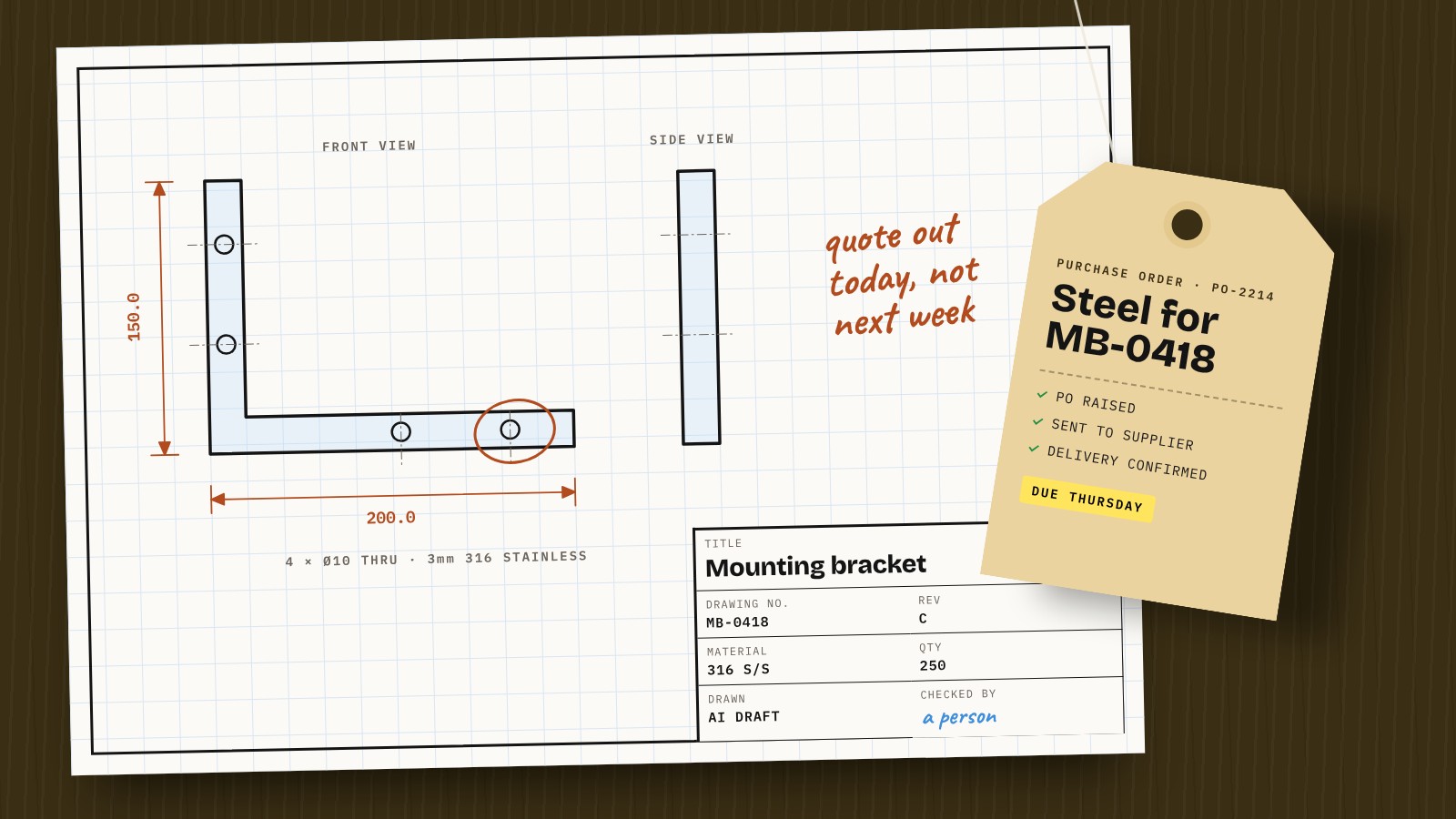
Before I got into AI and automation, I spent years doing electrical design and technical drawings. I still run an engineering business. So when people talk about AI in manufacturing, I know where the time actually goes, and it's not where the glossy brochures point.
The shop floor gets the headlines. The office is where the hours disappear: enquiries waiting for a quote, purchase orders typed up by hand, a supplier who hasn't confirmed a delivery date, and someone spending Monday morning pulling numbers out of three spreadsheets.
Most manufacturers are still at the start
If you haven't done much with AI yet, you're not on your own. Make UK's June 2026 report found that while AI is already helping some firms streamline admin, most manufacturers remain stuck at pilot or early adoption stage.
Make UK's chief executive told MPs the same month that 37% are running small pilots, 43% are experimenting and 18% have not done anything at all.
So the question isn't whether you're behind. It's where to start so the first thing you do actually pays off.
Where AI genuinely helps a manufacturer
- Quotes. An enquiry comes in with a drawing or spec attached. The key details are pulled out, laid against your pricing and a draft quote is ready for your estimator to check, so the quote goes out sooner.
- Purchase orders. POs raised from what's needed, sent to the right supplier and logged, without retyping part numbers.
- Supplier chasing. Order acknowledgements and delivery dates tracked, with a nudge to any supplier who hasn't confirmed.
- Customer updates. Order status and dispatch dates sent to customers before they have to ring and ask.
- Weekly reporting. Production, sales and late orders pulled into one dashboard that updates itself, instead of a Monday morning spent in spreadsheets.
- Quality paperwork. First drafts of certificates of conformity, non-conformance reports and work instructions from your templates, checked by someone who knows the job.
- Finding things. Ask in plain English for "the last time we made this bracket in stainless" and get the drawings, quotes and job notes back.
Most of that is automation with AI in the steps that need reading or writing. Same thing in, same thing out, every time.
What stays with your engineers
AI is good at the admin around manufacturing. It isn't an engineer.
- Technical judgement. It can pull dimensions and materials off a drawing. Whether the part can actually be made that way, at that tolerance, is a call for someone who's done it.
- Anything safety critical. Inspection sign-off, compliance and anything that ends up on a certificate gets checked by a person every time.
- Pricing decisions. AI can build the draft quote. Your estimator decides the number.
- Customer relationships. The call when an order's going to be late is yours.
AI also gets things confidently wrong. In engineering that matters more than most places, which is why everything it produces lands as a draft for a person to check.
Your drawings and data
Drawings, pricing and customer specs are commercially sensitive, and some of your customers will have contract terms about where their data goes.
- Business accounts only. No customer drawings in personal or free AI tools.
- Training off. Use plans that don't train on your data by default, like Claude Team.
- Check customer requirements first. If you work in defence, aerospace or anything with export controls, some data shouldn't go near a cloud AI tool at all. Check before you automate it.
How we set it up for a manufacturer
- Walk the office. We look at where your team's time actually goes, from enquiry to dispatch, and pick the jobs worth automating first.
- Connect what you already use. Your inbox, ERP or MRP system, spreadsheets and accounts wired together in Make. If your system has an API, Make can usually talk to it. We check yours before quoting.
- Set up Claude properly. A business account with Projects for your quote templates, quality documents and house style.
- Build the dashboard. Your weekly numbers in one place, updating themselves. Our live data dashboards start from £2,400.
- A human step built in. Quotes, POs and anything going to a customer stop for a person to check.
Most manufacturers start with a 45-minute session (£150). Automation builds start from £800, and a Claude Business Setup for the team is £795.
Questions people also ask
How can AI be used in manufacturing?
For most small and mid-sized manufacturers, the quickest wins are in the office: drafting quotes from enquiries and drawings, raising and chasing purchase orders, customer order updates, weekly production reporting and first drafts of quality paperwork. Shop-floor AI usually comes later.
Can AI read engineering drawings?
It can pull out a lot of the information, like part numbers, materials and dimensions, which speeds up quoting. It doesn't replace an engineer's judgement on whether a part can be made that way, so a person should check anything technical.
Is AI worth it for a small manufacturer?
If your team spends hours on quotes, purchase orders, chasing and reporting, almost certainly. Start with one job, prove it works and build from there.
Can AI connect to our ERP or MRP system?
Often, yes. Automation platforms like Make can connect to most systems that have an API. Older systems without one can sometimes be worked around with exports. We check yours before quoting anything.
Is it safe to put customer drawings into AI tools?
Not into personal or free accounts. Use business plans that don't train on your data, and check your customers' contract terms first. Defence, aerospace and export-controlled work may need to stay out of cloud AI tools altogether.
How much does it cost?
At Make Automations, a 45-minute session to work out where to start is £150, automation builds start from £800, live dashboards from £2,400 and a Claude Business Setup for the team is £795.