AI in Procurement and Supply Chain: A Practical Guide for UK Manufacturers and Distributors
How smaller firms can use AI and automation for purchase orders, supplier chasing, quote comparisons and stock alerts, and why the AI should never be the one spending the money
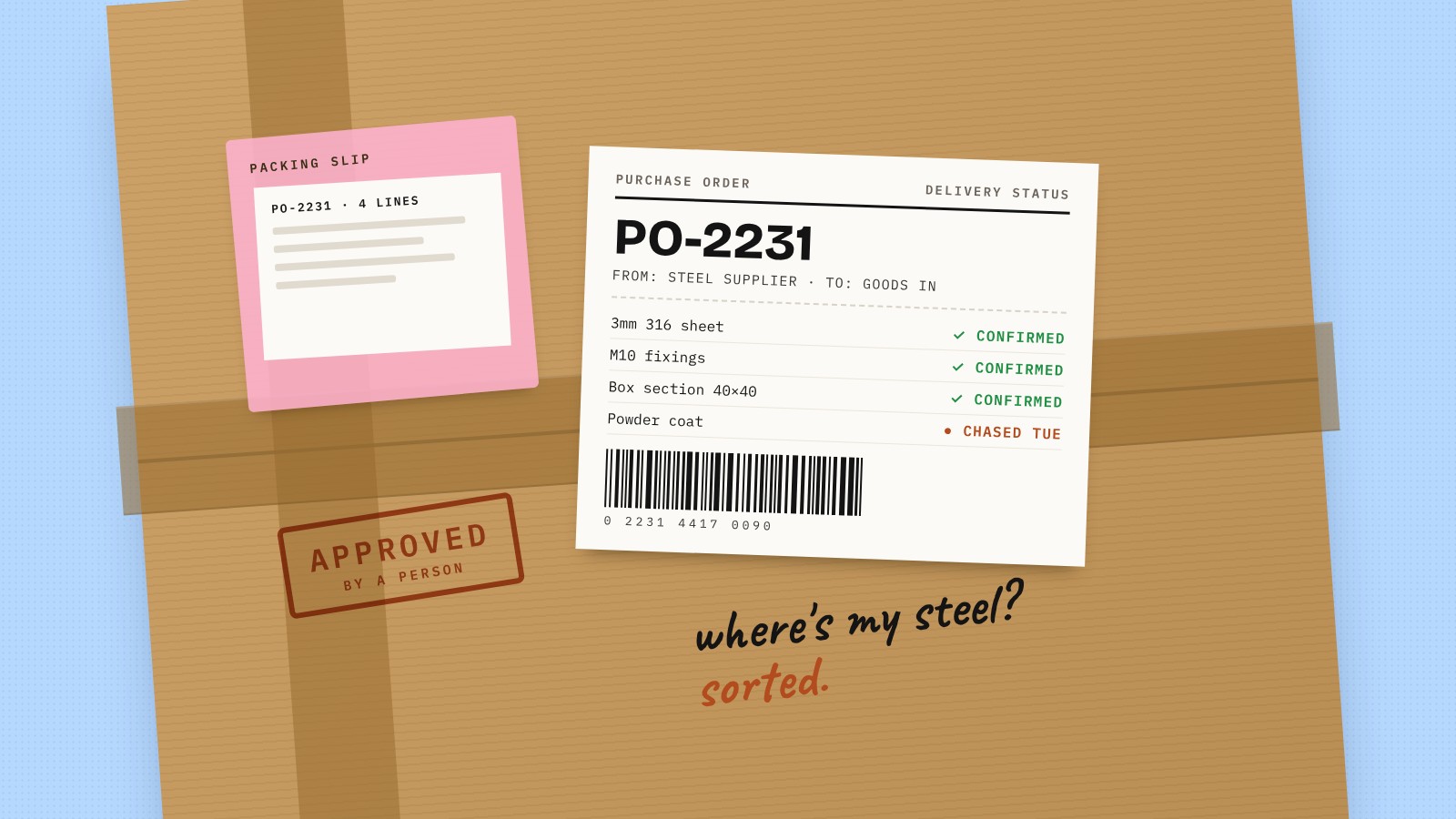
Big companies have procurement teams and expensive systems. Most smaller manufacturers and distributors have one or two people who also do six other jobs, an inbox full of supplier emails and a spreadsheet that's only up to date when someone remembers.
That's exactly where automation pays for itself. Not by replacing the buyer, but by doing the chasing, logging and comparing so the buyer can spend their time on suppliers and prices.
Why this matters right now
Supply chains haven't calmed down. BDO's mid-market survey found material delays, stock shortages and suppliers folding were a top concern for two in five business leaders. Bibby Financial Services found over 60% of SMEs saw customers and suppliers ceasing to trade in just six months.
And UK firms are behind on using AI to cope. The CIPS 2026 Global State of Procurement and Supply survey found the UK and Ireland have adopted AI in procurement the least of the regions surveyed.
When there's more chasing to do and fewer people to do it, that's the gap to close.
Where AI and automation genuinely help
- Purchase orders. A request comes in from the shop floor or a stock alert, and a draft PO is created with the right supplier, part numbers and prices. A person approves it and it goes out.
- Supplier chasing. Every PO is tracked until the supplier acknowledges it and confirms a delivery date. Anyone who hasn't replied gets a polite nudge, and you get a list of what's still outstanding.
- Quote comparisons. Supplier quotes arrive as PDFs and emails in every format going. AI pulls the prices, lead times and terms into one table so you can compare like for like.
- Invoice matching. Supplier invoices checked against the PO and what was actually delivered, with mismatches flagged before anyone pays. (More on that in our guide to automating invoicing.)
- Stock alerts. Low stock flagged before it becomes a problem, with a draft reorder ready to approve.
- Late delivery warnings. When a supplier pushes a date, the jobs that depend on it are flagged straight away, so you can tell the customer before they ring you.
- Keeping an eye on key suppliers. Alerts when a key supplier's filings change at Companies House, so you're not the last to hear they're in trouble.
- Spend reports. What you're spending, with whom and on what, pulled into one view that updates itself.
Don't let AI spend your money
There's a lot of noise about AI agents that can buy things on your behalf. I wouldn't let one loose with real money, and I'd say the same about placing purchase orders.
An agent picks its own route, which is brilliant when you need flexibility and a liability when it's committing your cash. All it would take is a supplier email with hidden instructions in it, or a misread quantity, and you've ordered the wrong thing.
So for procurement, the rule is simple:
- AI drafts the PO. A person approves it.
- AI compares the quotes. A person picks the supplier.
- AI flags the mismatch. A person decides whether to pay.
Repeatable steps like chasing and logging are a job for automation, which does the same thing the same way every time. AI sits inside the steps that need reading, like pulling prices out of a messy quote.
What stays human
- Choosing suppliers. Price is one thing. Reliability, quality and whether they pick up the phone when it goes wrong are judgement calls.
- Negotiation. AI can give you the numbers to negotiate with. The conversation is yours.
- Supplier relationships. When you need a favour on a rush order, it's the relationship that gets it done.
- Contracts and terms. Anything you sign gets read by a person.
How we set it up
- Map the flow. From request to PO to delivery to invoice, we look at where your team's time goes and where things get missed.
- Connect what you already use. Your inbox, accounts software, ERP or stock system and spreadsheets wired together in Make, owned by you. If your system has an API, Make can usually talk to it. We check yours before quoting.
- Build in the approvals. Nothing goes to a supplier and nothing gets paid without a person saying yes.
- Give you the view. A dashboard of open POs, late deliveries, low stock and spend, updating itself. Our live data dashboards start from £2,400.
Most firms start with a 45-minute session (£150). Automation builds start from £800.
Questions people also ask
How is AI used in procurement?
For smaller businesses, mostly for admin: drafting purchase orders, chasing suppliers for acknowledgements and delivery dates, comparing supplier quotes, matching invoices to orders, flagging low stock and producing spend reports. A person approves anything that commits money.
Can AI be used in supply chain management for small businesses?
Yes. You don't need an enterprise system. Automation platforms like Make can connect your inbox, stock system and accounts so deliveries are tracked, late suppliers are chased and the jobs affected by a delay are flagged straight away.
Should an AI agent place purchase orders?
We don't recommend it. Let AI draft the order and a person approve it. An agent committing money on its own can be caught out by a misread quantity or by hidden instructions in an email.
Can AI compare supplier quotes?
Yes. AI is good at pulling prices, lead times and terms out of quotes in different formats and putting them side by side. Choosing the supplier stays with you.
Will this work with our ERP or stock system?
Often, yes. Make connects to most systems that have an API, and older systems can sometimes be worked around with exports. We check yours before quoting anything.
How much does it cost?
At Make Automations, a 45-minute session to work out where to start is £150, automation builds start from £800 and live dashboards from £2,400.